
The Best Aerial Lifts for Tree Service Companies: Why Tracked, Towable Lifts Beat Bucket Trucks in Tight Yards
Share Article
Ask a tree service owner in the Northeast about the job that ate their whole afternoon, and you'll probably hear about a tree in a backyard. It's behind a fence, up a little slope, boxed in between the house and the neighbor's property line — and the bucket truck can't get within fifty feet of it. So the crew ropes up and climbs. That's more hours, more risk, and a lot of the job riding on one person in the canopy.
Bucket trucks earn their keep on roadsides and utility runs. They were never built for the tight, tree-filled lots you find all over New England — old neighborhoods, narrow driveways, mature oaks and maples crowding the house. When the problem is access, a bigger truck doesn't help. A smaller machine that can reach the tree on its own does.
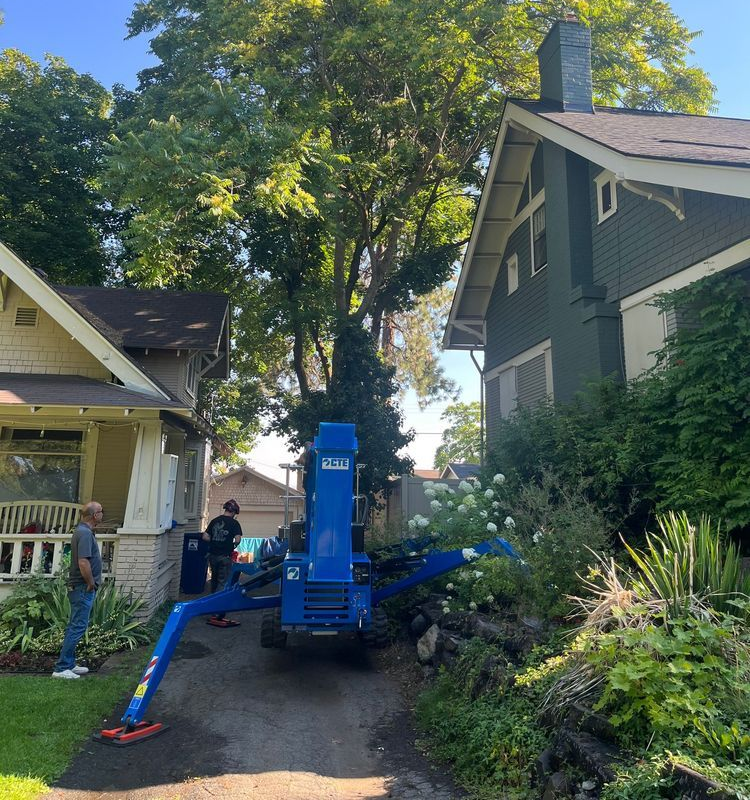
That's where a tracked, towable aerial lift comes in. You tow it to the site behind a pickup, unhook it, and drive it into place on rubber tracks — through a garden gate, across the grass, up a grade, around the things a truck would get stuck on. Once it's planted, your operator runs the job from a stable, rotating basket instead of a climbing line. Below, we'll get into why tree crews keep switching to these lifts, and walk through the three CTE Traccess models we recommend for tree work — the Traccess 160, 230, and 270 — so you can line up the right height and lifting capacity with the work you actually take on.
What is a CTE Traccess Lift?
So what exactly is a CTE Traccess? It's a tracked aerial lift — some people call this style a spider lift — and it's the CTE Traccess line we point tree companies to for tight-access work. Instead of carrying its boom on a truck chassis the way a bucket truck does, a Traccess rides on rubber crawler tracks. That one difference is what turns it into a real bucket truck alternative for tree work.
Here's how it works on a job: you tow the Traccess to the site behind a pickup on a regular driver's license, unhook it, and drive it into position on its own tracks. No second truck, no crane, no hauling gear across the yard by hand.
Three things let a Traccess work where a truck can't:
Three things let a Traccess work where a truck can't:
- The tracks widen and narrow. Set them wide for a stable base while the operator is up in the tree, then pull them in — down to roughly 30 to 31 inches on the CTE Traccess lifts — to fit through a garden gate or a side yard. A full-size aerial lift can't do that.
- They climb and grip. The tracks handle grass, gravel, soft ground, and slopes a wheeled machine would spin out on, so the Traccess reaches the backyard tree under its own power without tearing up the lawn.
- They set up on their own outriggers.
Once the lift is where you want it, four hydraulic outriggers level it on uneven ground and give the boom a solid platform — no need for the flat pavement a bucket truck depends on.
The payoff for your crew is simple: a Traccess gets a guarded, rotating basket to trees that used to mean a full climb, on properties a truck can't touch. Next, we'll break down the three models we recommend — and which jobs each one suits.
The 3 CTE Traccess Models Built for Tree Service Work
We recommend three CTE Traccess lifts for tree companies. They share the same build — rubber tracks, a towable trailer setup, an articulating jib, and a rotating basket — and step up in height and reach as the trees get bigger. Here's how to tell them apart and which jobs each one suits.
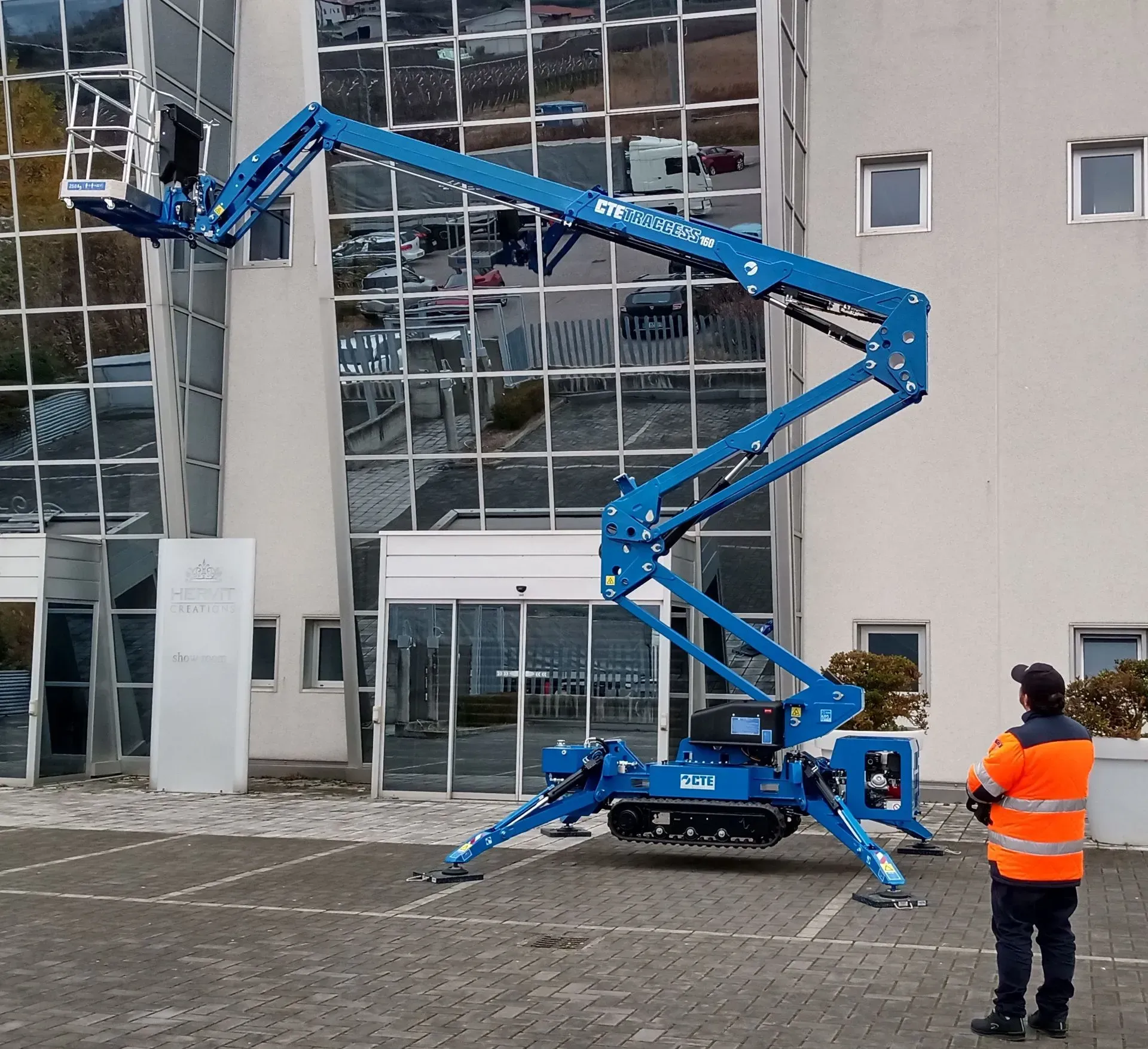
CTE Traccess 160 — the tight-access specialist (51 ft)
The Traccess 160 is the one you reach for when access is the whole problem. It's the smallest of the three, so it slips through the narrowest gates and side yards and still puts your operator 51 feet up. For residential pruning, storm cleanup, and removals in fenced backyards, this is the workhorse.
- Working height: 51 ft | Outreach: 24 ft | Basket capacity: 550 lb
- Track width: narrows to 2'7", widens to 3'9" for a stable base
- Power: Honda gas, Lombardini diesel, or 48V lithium battery for quiet, zero-emission work
- Controls: ~25% gradeability | 400° turret rotation | rise-and-drive jib
See the full specs and options for the CTE Traccess 160.
CTE Traccess 230 — the everyday all-rounder (75 ft)
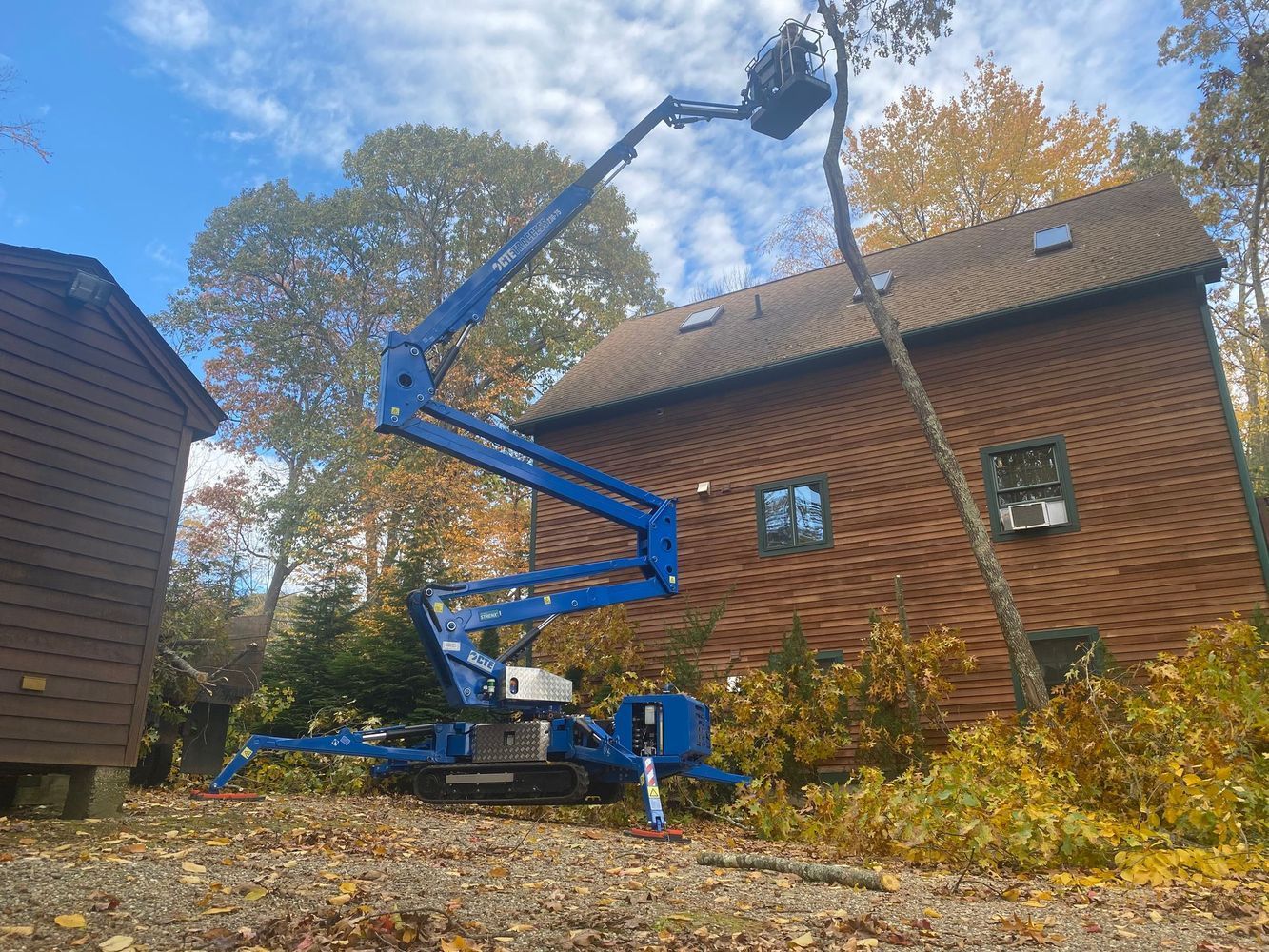
The Traccess 230 is the middle child and, for a lot of tree crews, the sweet spot. Seventy-five feet of height and 39 feet of outreach let it reach over a house or a garage to a tree in the back, while still tucking in tight enough for suburban lots. Four hydraulic outriggers with ground-pressure sensors and a narrow-setup option keep it steady on the uneven ground you actually work on.
- Working height: 75 ft | Outreach: 39 ft | Basket capacity: 440 lb
- Track width: narrows to 2'7", widens to 4'2"
- Power: Kubota Z602 diesel or 48V 300Ah lithium battery
- Controls: ~31% gradeability | 620° turret rotation | ±90° basket rotation
See the full specs and options for the CTE Traccess 230.
CTE Traccess 270 — the big-canopy reach (88ft.)
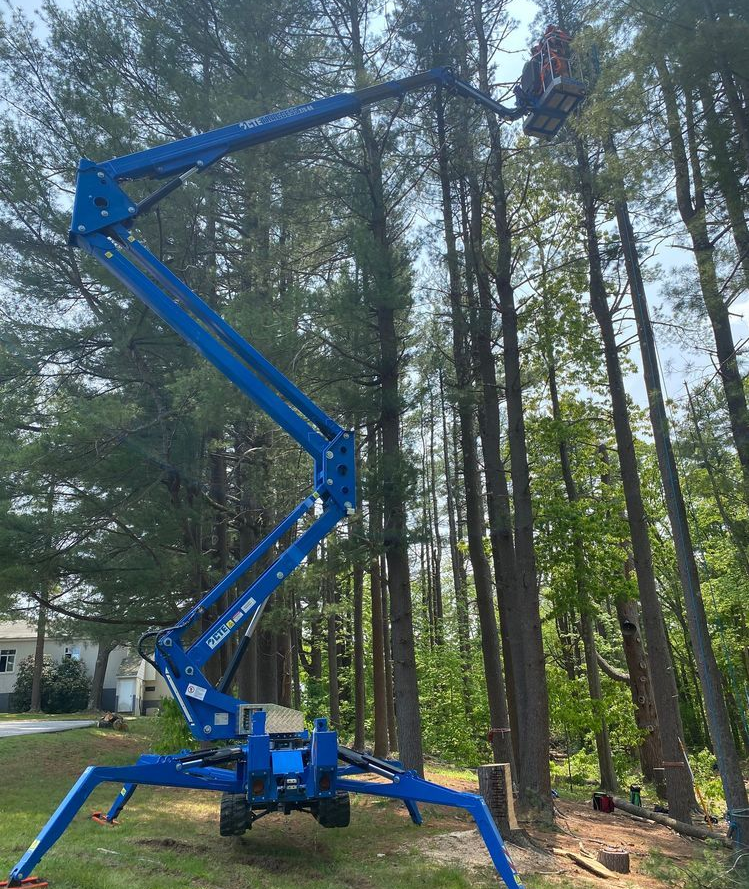
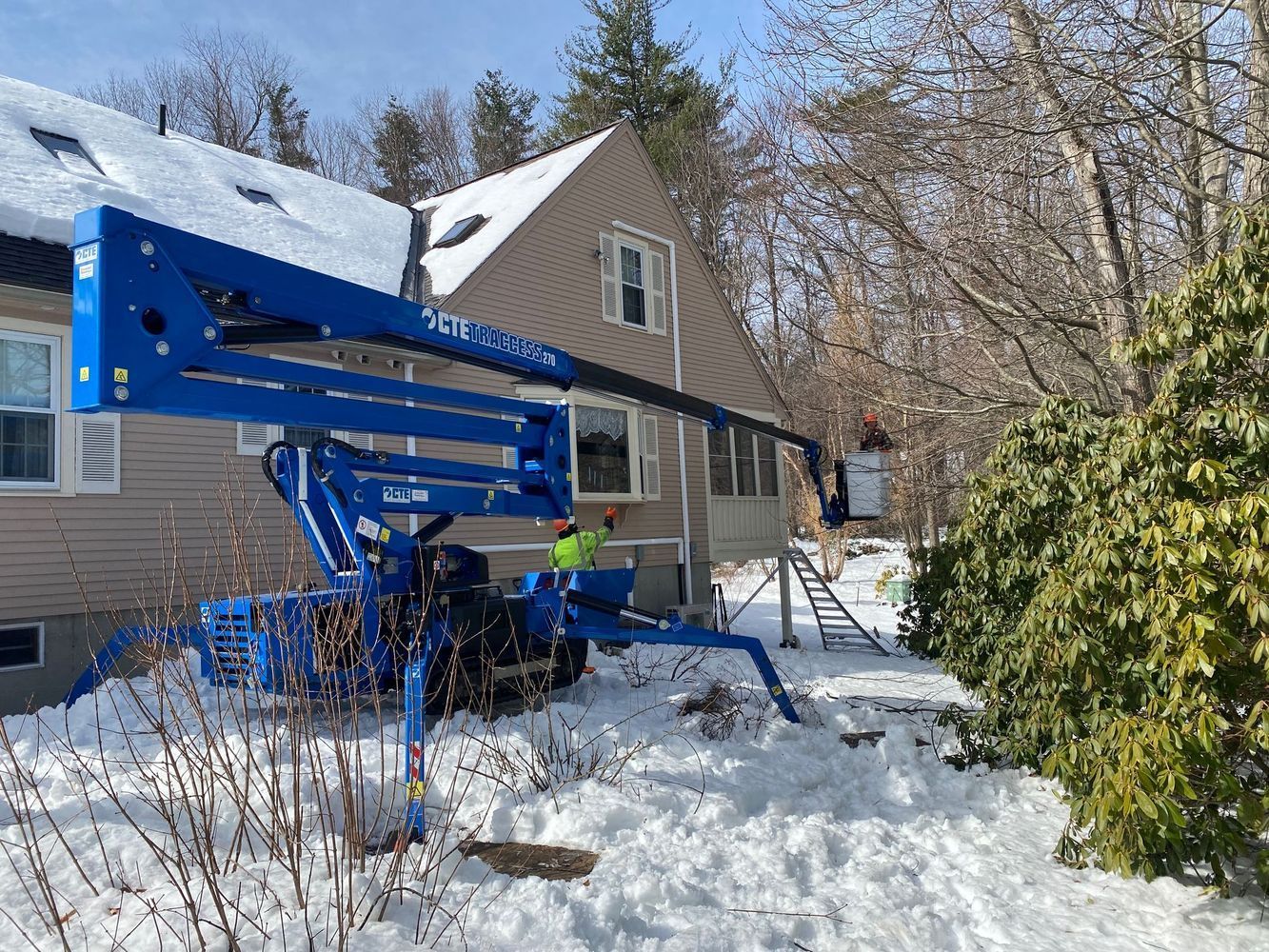
When the job is a tall, mature hardwood or a removal that has to clear the house from a distance, the Traccess 270 has the numbers: 88 feet of working height and 46 feet of outreach, the longest in the line. It still crawls in on tracks and sets up on its own, so you get high-reach performance without giving up the tight access that makes these lifts worth owning.
- Working height: 88 ft | Outreach: 46 ft | Basket capacity: 550 lb
- Track width: narrows to 2'6", widens to 4'2"
- Power: Kubota D902 diesel or 48V hybrid operation
- Controls: 640° turret rotation | ±90° basket rotation | rise-and-drive jib
See the full specs and options for the
CTE Traccess 270.
Tracked Lift vs. Bucket Truck: A Side-by-Side for Tree Work
Both machines have a place in this trade. The question isn't which one is better across the board — it's which one fits the job in front of you. Here's how a tracked aerial lift and a bucket truck stack up on the things that actually decide a tree job.
| What matters on the job | Tracked aerial lift (CTE Traccess) | Bucket Truck |
|---|---|---|
| Getting to the tree | Drives in on rubber tracks, front or back yard | Limited to where the truck can park |
| Tightest access | Tracks narrow to about 30–31 inches — fits a garden gate | Needs a full driveway or wider |
| Ground and slopes | Grips grass, gravel, soft ground, and grades | Wants firm, level pavement |
| Setup | Self-levels on four hydraulic outriggers | Outriggers need flat, solid footing |
| Lawn and property | Light footprint on tracks, less turf damage | Heavy axles rut lawns and crack pavers |
| Reaching over a house | Up to 46 ft of outreach on the 270 | Reach tied to where the truck can sit |
| Crew Safety | Operator works from a guarded, rotating basket | Often forces a full climb when access fails |
| Transport | Tow behind a pickup — no CDL needed | Dedicated truck and CDL driver |
| Best at | Tight, gated, backyard, and off-street removals | Fast roadside and utility runs |
The short version: a bucket truck is hard to beat on open roadside work, where it can park, set up, and move down the block. But the moment the tree is off the pavement — behind a fence, up a grade, or boxed into a backyard — a towable tracked lift is the machine that actually reaches it. For most tree companies in the Northeast, those backyard jobs are a big slice of the schedule, which is why so many crews now run a tracked lift alongside the truck instead of choosing one over the other.
How to Choose the Right Traccess Lift for Your Tree Business
Picking a lift comes down to three questions: how tall the trees you work on are, how you want to power the machine, and if you're ready to buy or want to rent first. Here's how to think through each one.
Match the height and reach to your typical jobs
Buy for the work you do most weeks, not the one giant oak you see once a year. A quick way to sort it:
- Mostly residential pruning and fenced-yard removals? The Traccess 160 at 51 ft handles the bulk of it and gets into the tightest spots.
- A mix of suburban removals, some reaching over a house or garage? The Traccess 230 at 75 ft and 39 ft of outreach is the do-everything pick.
- Regularly taking down tall, mature hardwoods? The Traccess 270 at 88 ft with 46 ft of outreach gives you the room to clear the house from a distance.
If you're between two sizes, size up on outreach before height — the ability to reach over an obstacle wins more jobs than raw height alone.
Pick the power source for how you work
Each Traccess model comes with a choice of drive, and it changes how and where you can run it:
- Diesel is the standard for all-day production and the most torque on grades — the right pick if the lift runs hard every day.
- Gas (on the 160) keeps the buy-in lower and fueling simple for a smaller operation.
- 48V lithium battery
runs quiet and puts out no exhaust, so it's the one for enclosed courtyards, noise-sensitive neighborhoods, and early-morning starts where a running engine would draw complaints.
Buy or rent first
If tracked lifts are new to your crew, renting one for a few jobs is a low-risk way to see how it changes your day before you commit. We offer both — you can
rent a Traccess lift to prove out the fit, then
request a quote to buy once you know which model earns its keep. Owning makes sense the moment the lift is booking enough backyard jobs to cover itself; until then, renting keeps you flexible through the busy season.
Tree Service Aerial Lift FAQ
What's the difference between a spider lift and a bucket truck?
A bucket truck carries its boom on a road chassis, so it can only work from wherever the truck can park. A spider lift — the tracked lift in this guide — separates the boom from the truck. You tow it in, then drive it to the tree on rubber tracks, so it reaches spots a truck can't: backyards, slopes, soft ground, and anywhere behind a gate.
Will a tracked aerial lift damage a customer's lawn?
Far less than a truck. The weight rides on wide rubber tracks that spread the load instead of concentrating it on four tires or heavy axles, so a tracked lift crosses grass and soft ground with a lighter footprint. Setting the outriggers on pads protects the turf where the lift parks.
How tall of a tree can these lifts reach?
The three CTE Traccess models cover 51, 75, and 88 feet of working height, with up to 46 feet of outreach on the 270. That range handles everything from residential pruning to tall, mature hardwood removals — the trick is matching the height and outreach to the trees you work on most.
Do you need a CDL to tow a tracked aerial lift?
No. The CTE Traccess lifts are among the most compact machines in their class, and they tow under the CDL weight limit — so you can pull one behind a standard work truck on a regular driver's license, with no commercial license required. That's a big part of what makes them practical for tree work: anyone on your crew who can drive the truck can get the lift to the job, set it up, and move to the next site the same day. Want the exact towing weight for a specific model? Just ask us.
Should a tree company rent or buy an aerial lift?
Rent first if a tracked lift is new to your crew — a few jobs will show you how much faster and safer the work gets before you commit. Buying pays off once the lift books enough backyard and off-street work to cover itself. We offer rentals and sales, so you can start with a rental and move to a purchase when the numbers make sense.
The Bottom Line for Northeast Tree Companies
Most of the trees that pay your bills aren't standing at the curb. They're in backyards, behind fences, up slopes, and packed into the tight lots that fill older towns across Connecticut and the rest of the Northeast — the exact places a bucket truck can't reach. A tracked, towable aerial lift closes that gap. It tows in behind a pickup, drives to the tree on its own tracks, fits through a garden gate, and puts your operator in a guarded, rotating basket instead of on a climbing line. That means faster jobs, less wear on your crew, and work you used to turn down now on the table.
The three CTE Traccess models give you a size for every job — the Traccess 160 for the tightest access, the Traccess 230 as the everyday all-rounder, and the Traccess 270 for tall, mature canopies. Match the height and outreach to the work you do most, pick the power source that fits how you run, and you've got a machine that earns its spot in the fleet.
Ready to reach the trees your truck can't?
We help tree companies across the Northeast and throughout North America get into the right lift — to buy or to rent. Tell us the kind of jobs you take on and we'll point you to the model that fits.
- Talk it through: Contact our team and we'll help you size a lift to your work.
- Try before you buy: Rent a CTE Traccess lift for a few jobs and see how it changes your day.
- Ready to own: Request a quote on the Traccess 160, 230, or 270.