The Best Equipment for Lifting Shingles onto a Roof: Shingle Elevators and Inclined Hoists Compared
Share Article
If you've spent any time on a roofing crew, you already know that getting shingles, underlayment, and tear-off debris up and down the ladder is one of the slowest and most physically demanding parts of the job. The right lifting equipment can completely change how a crew works throughout the day by reducing fatigue, speeding up production, and lowering the risk of injury during busy roofing seasons.
The challenge is that not all lifting equipment is built for the same type of roofing work. Some machines are better suited for smaller residential projects, while others are designed for taller commercial buildings, heavier materials, and steady daily use. Shingle elevators and inclined material hoists all help move materials to the roof, but the right choice depends on the size of the jobs you take on, the materials your crews handle most, and how frequently the equipment will be used. This guide compares the most common options so contractors can match the right machine to the way their business actually operates.
Why Lifting Equipment Matters on Roofing Jobs
Roofing is one of the most physically demanding trades in construction, and a large portion of the workday involves moving heavy materials between the ground and the roof. A standard bundle of asphalt shingles weighs between 60 and 80 pounds, and a typical residential reroof can require anywhere from 25 to 50 bundles, depending on the size and pitch of the home. Carrying that volume up a ladder by hand slows crews down and adds unnecessary physical strain throughout the day.
Lifting equipment helps solve that problem by moving materials directly from the truck or ground level to the roof in a controlled and repeatable way. Crews can move materials faster, reduce strain throughout the day, and spend less time carrying heavy loads up ladders by hand. For contractors taking on more projects each season, the right lifting equipment can also create meaningful labor savings over time.
Ladder Lifts: The Entry-Level Option
A ladder lift, sometimes called a shingle elevator or roofing ladder lift, is the most basic type of powered lifting equipment used in residential roofing. It uses a ladder-style track with a small platform powered by an electric or gas-driven motor.
Where Ladder Lifts Work Well
Ladder lifts are designed for lighter material loads and shorter reach, which makes them a practical option for crews working mainly on single-story or smaller two-story residential homes. They are compact, easier to transport, and require less setup time than larger lifting systems.
For roofing contractors handling smaller jobs with moderate material loads, a ladder lift can be a reasonable starting point that improves efficiency without a major upfront investment.
Where They Start to Reach Their Limits
The trade-off is that ladder lifts are more limited in both height and lifting capacity. Most consumer-grade ladder lifts top out around 28 to 40 feet of reach and 250 to 400 pounds of capacity. That can become a problem on taller homes, steep-pitch roofs, or larger commercial projects.
The platforms are also designed mainly for shingles, which limits the variety of materials crews can move efficiently. Contractors handling solar panels, windows, masonry materials, or scaffolding usually find the equipment becomes restrictive once projects become more demanding.
Most ladder lifts also need to be transported in sections and assembled on each jobsite before work can begin. For smaller residential jobs, that extra setup may be manageable, but it still adds time at the start and end of every project.
For contractors taking on larger homes or a wider variety of jobs, the limitations of a ladder lift can eventually slow productivity during busy seasons.
Shingle Elevators and Roof Shingle Ladder Lifts
The terms shingle elevator, roof shingle ladder lift, and roofing ladder lift are commonly used interchangeably across the roofing industry. In most cases, they refer to the same category of ladder-style lifting equipment, although some manufacturers build heavier-duty versions intended for higher daily use.
Inclined Material Hoists: The Heavy-Duty Option
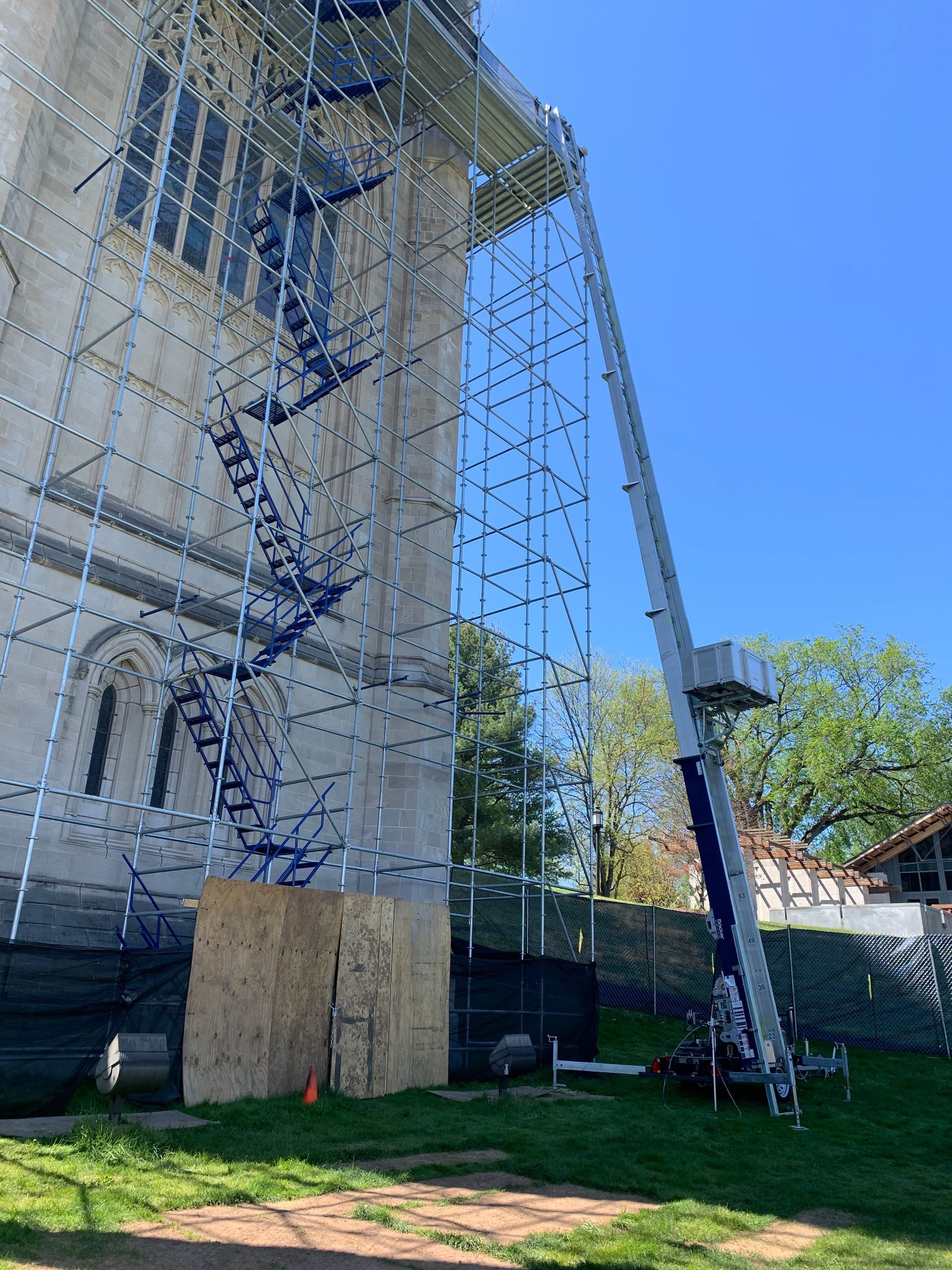
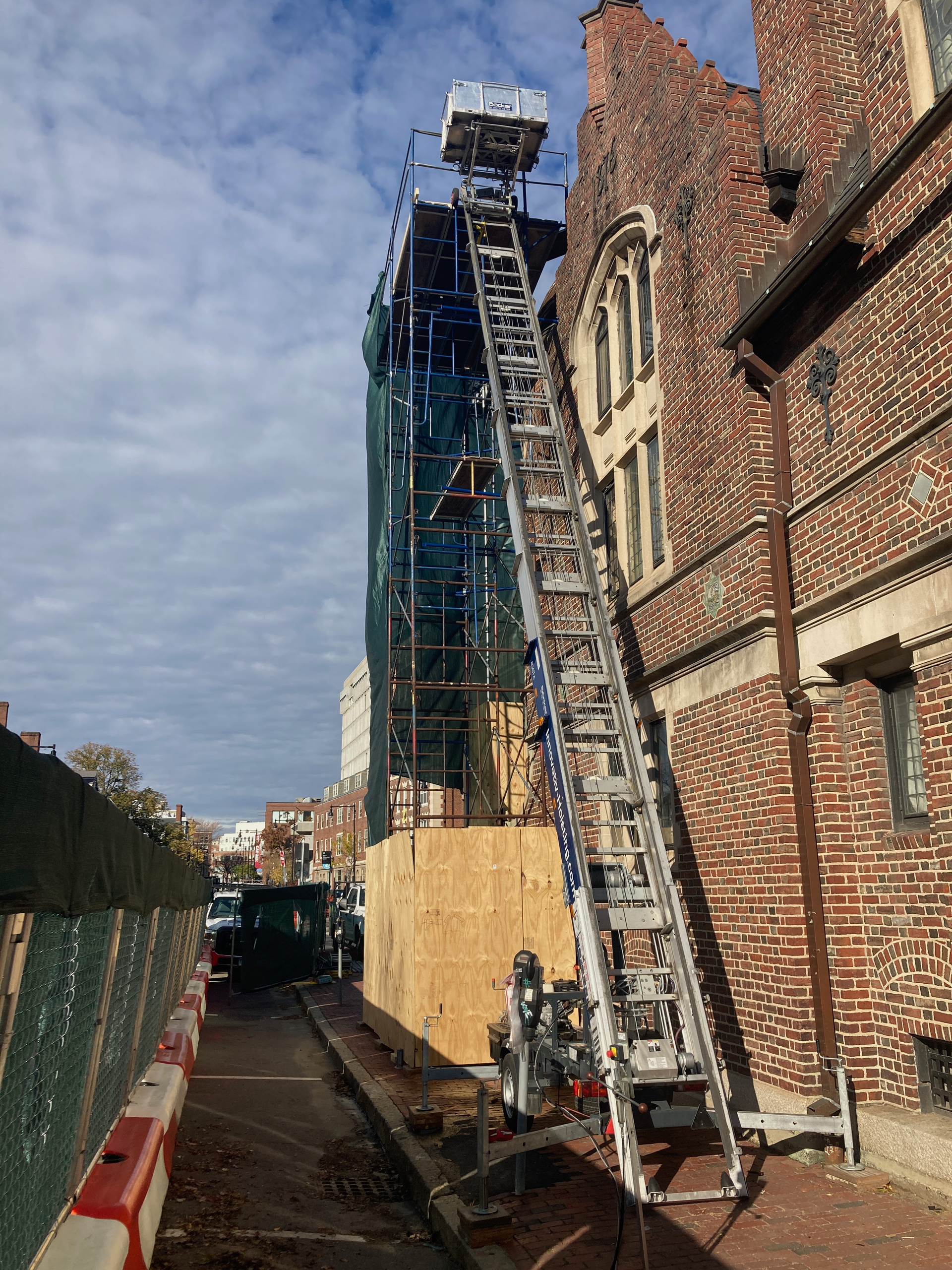
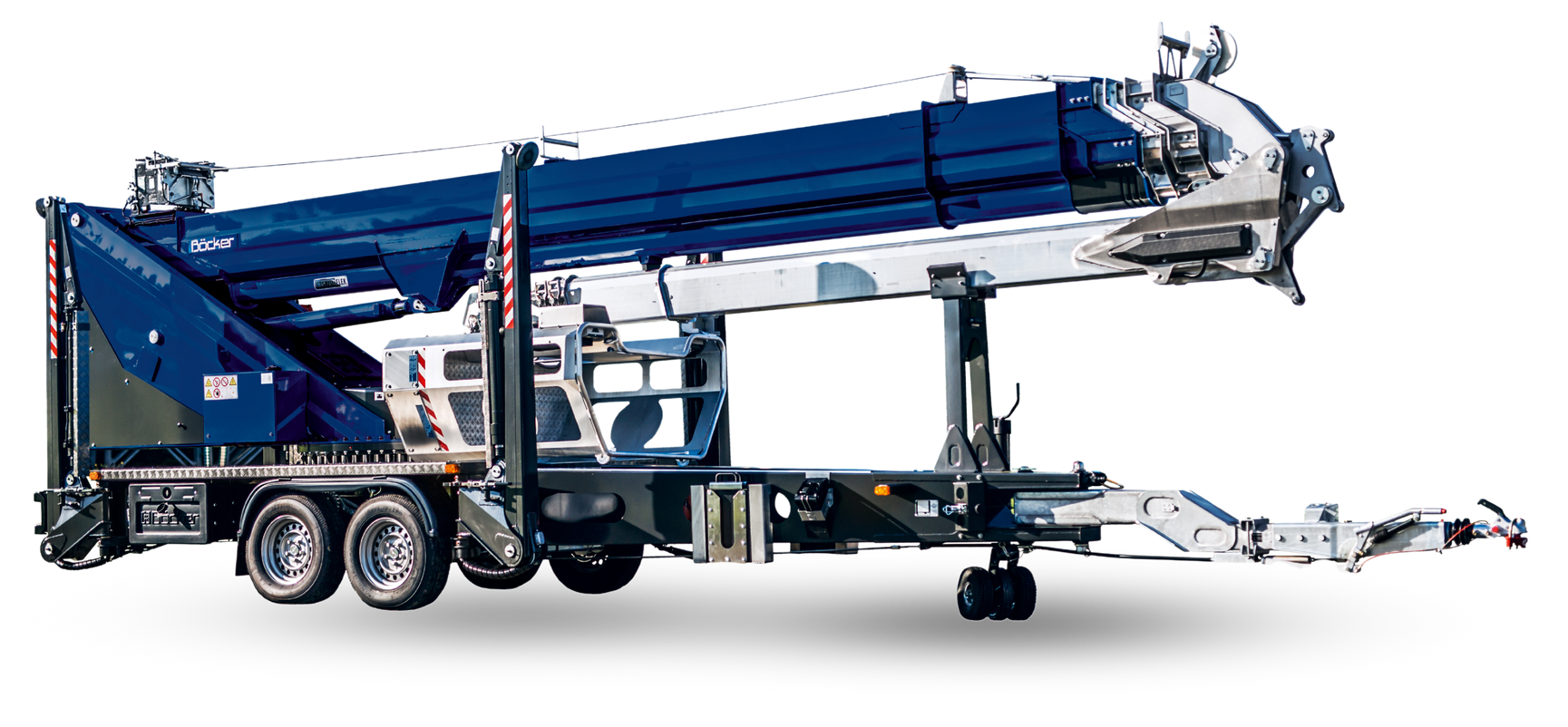
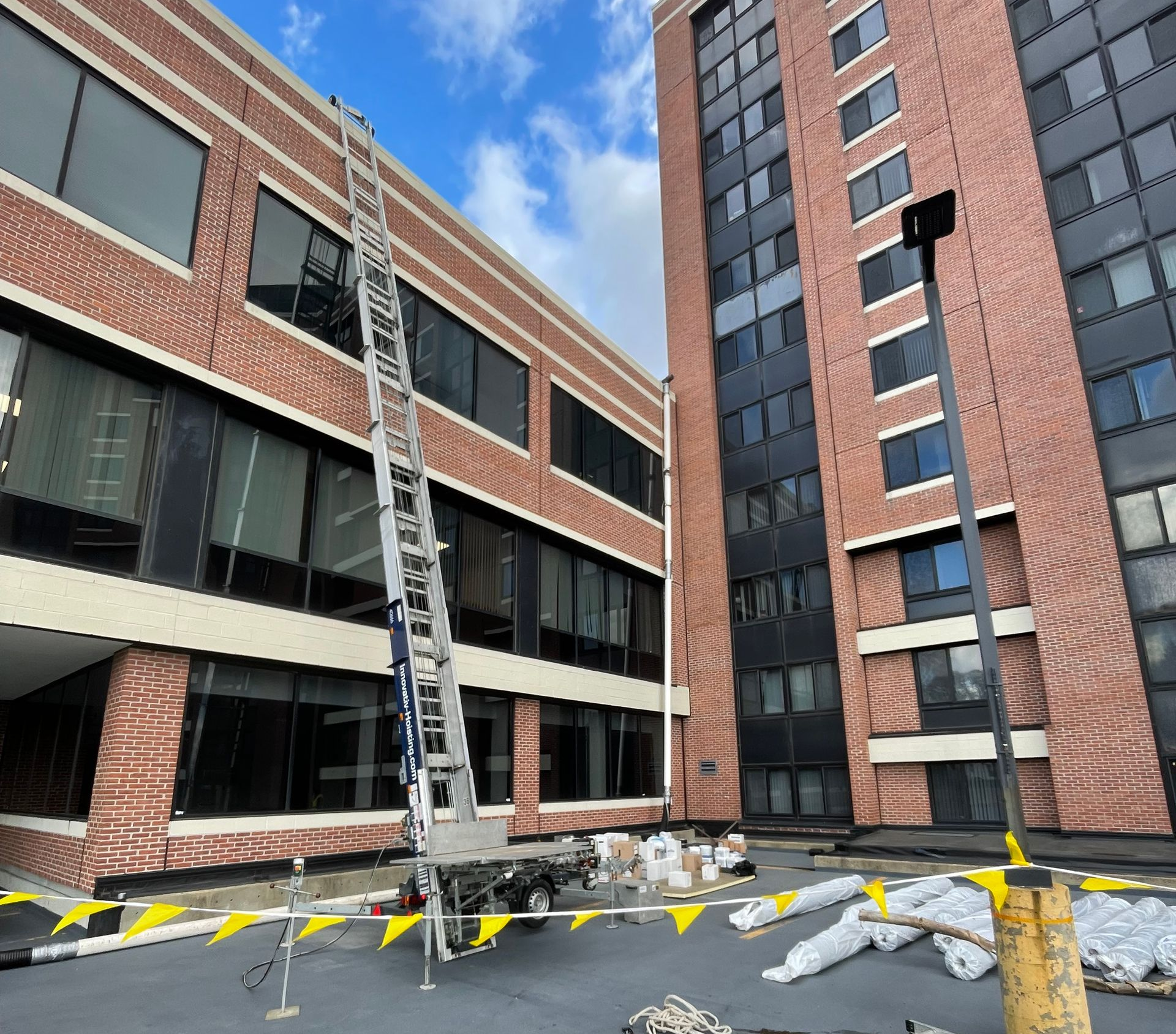
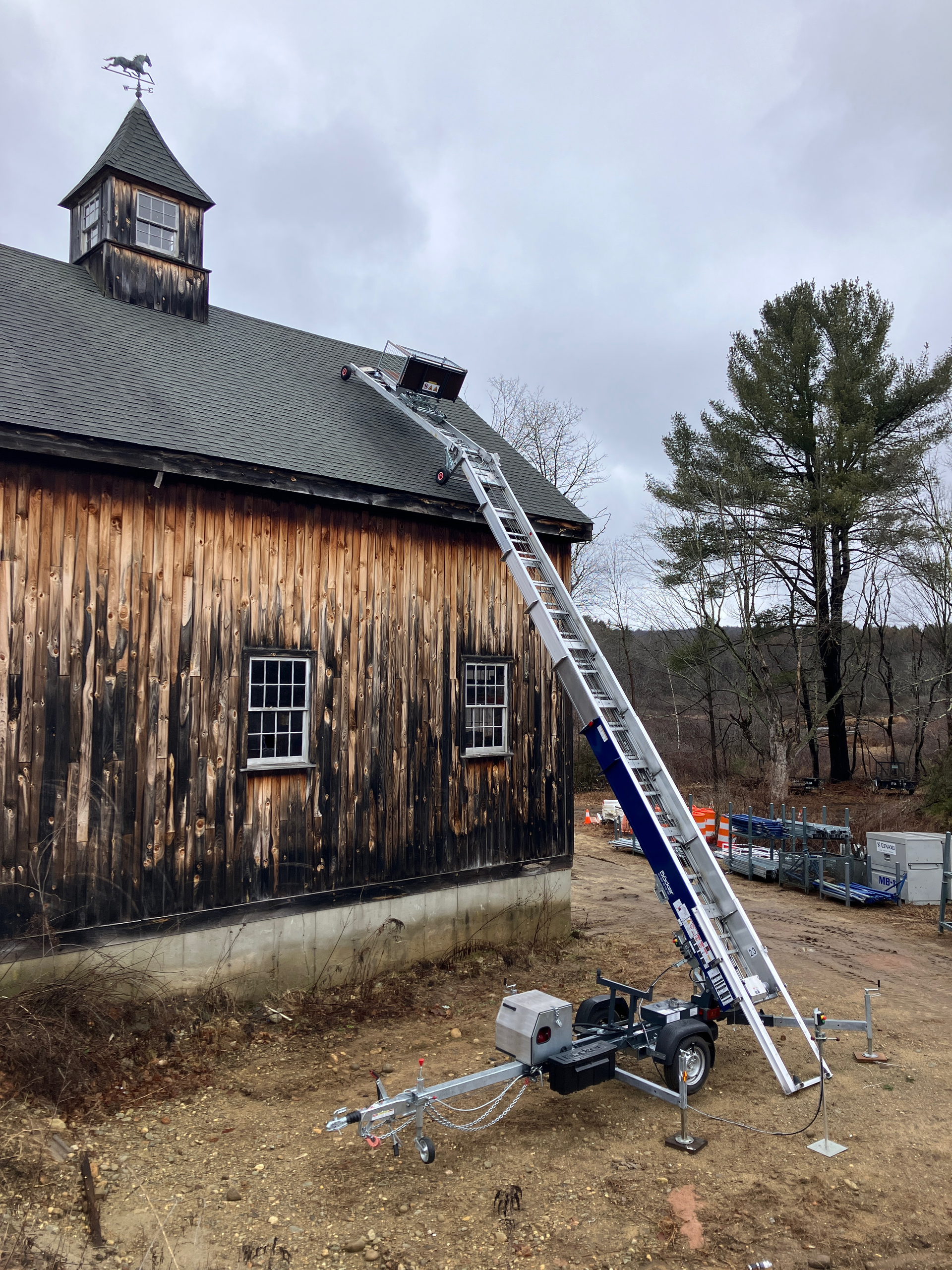
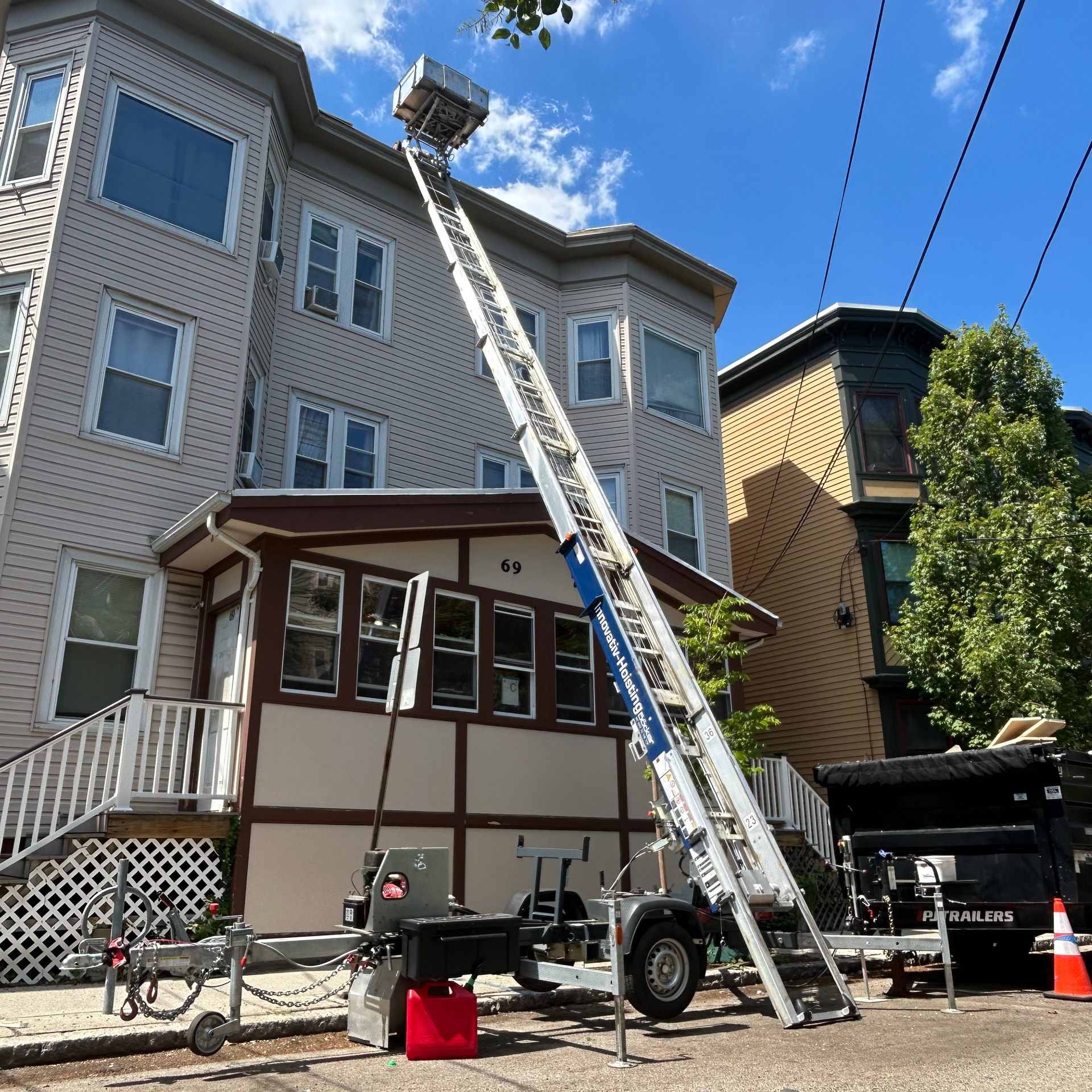
An inclined material hoist is a different category of equipment altogether. Instead of using a ladder-style track, inclined hoists are trailer-mounted machines with telescoping booms and interchangeable platforms designed for a wide variety of materials.
These machines are built for greater reach, heavier loads, and more demanding projects than standard ladder lifts.
Where Inclined Hoists Work Well
Inclined material hoists are designed for contractors who need more than basic shingle handling. The platforms can be swapped to move solar panels, windows, doors, drywall, scaffolding, bricks, and other building materials. That flexibility makes the equipment useful across multiple trades instead of just roofing.
The additional reach also makes inclined hoists a strong fit for larger residential homes, steep-pitch roofs, multi-story buildings, and light commercial projects.
For example, the Böcker Junior 77 H reaches 77 feet and handles up to 550 pounds, while the Avario 85 H reaches 85 feet and supports up to 880 pounds. The larger Arriva 119 series extends even further for taller commercial work.
Each model is trailer-mounted and towable without a CDL, allowing crews to move equipment between jobsites using their existing work vehicles.
Unlike traditional shingle elevators that need to be assembled piece by piece on each jobsite, inclined material hoists are trailer-mounted machines designed for fast setup. In most cases, one operator can stabilize the machine, extend the rails to the roofline, and be ready to work in about 10 minutes.
Where Inclined Hoists Fall Short
The biggest consideration is the upfront investment. Compared to a basic ladder lift, inclined material hoists cost significantly more and require additional storage space when not in use.
For contractors handling mostly small residential roofing jobs with limited material variety, the additional lifting capacity may not always be necessary.
For contractors running larger homes, multi-story projects, or multi-trade operations, though, the long-term productivity and labor savings usually outweigh the higher initial cost.
How the Two Options Compare
The biggest differences between these machines come down to reach, lifting capacity, and the types of materials they are designed to handle.
Shingle elevators work well for smaller residential roofing jobs with standard shingle loads. They are affordable, compact, and relatively simple to operate, but their capabilities are limited once jobs become larger or more demanding.
Inclined material hoists open the door to a much wider range of projects, including larger homes, steep-pitch roofs, commercial buildings, and jobs involving materials beyond shingles.
Many contractors eventually reach a point where a standard ladder lift starts limiting the type of work they can take on efficiently. Larger homes, taller buildings, and more complex projects usually shift the conversation toward inclined material hoists, either as a rental or as a long-term equipment investment.
Matching the Equipment to Your Business
The best option depends less on which machine is technically the most powerful and more on the kind of work your crews handle every day.
Smaller Residential Roofing Crews
For companies focused mainly on single-story homes and standard asphalt shingle work, a ladder lift can be a practical fit. The lower cost and simpler setup make them a reasonable starting point for contractors early in their growth.
Mid-Sized Roofing Contractors
For contractors handling a steady mix of single-story and two-story homes, especially in markets with larger or older housing stock, an inclined material hoist often becomes the stronger long-term option.
The added reach and lifting capacity remove many of the limitations tied to smaller ladder lifts, while the interchangeable platforms create additional opportunities for contractors involved in solar installation, window replacement, or exterior renovation work.
Larger Crews and Multi-Trade Contractors
For companies managing multiple crews, commercial projects, or several trades throughout the year, inclined material hoists are usually the most efficient choice.
The ability to move heavier materials, reach taller structures, and switch between platforms for different applications gives larger contractors much more flexibility across changing project demands.
For contractors still unsure which category fits their business, renting an inclined hoist for a few projects before purchasing can be a useful way to evaluate how the equipment performs on real jobsites. Our guide to
renting vs. buying an inclined material hoist walks through that decision in more detail.
Safety and Crew Efficiency
Speed matters, but safety is just as important on roofing jobs.
According to the Bureau of Labor Statistics, roofers consistently rank among the highest-risk occupations in the United States, with falls and overexertion injuries remaining two of the most common causes of lost workdays. Carrying shingles and heavy materials up ladders throughout the day contributes directly to both issues.
Lifting equipment reduces repeated manual carrying, helping lower physical strain on crews throughout the workday while reducing fatigue-related injury risks. For larger companies, that improvement adds up across the season and can positively affect productivity, crew retention, and workers' compensation costs.
Proper training still matters regardless of which equipment is being used. Operators should understand setup procedures, load limits, platform attachments, and shutdown protocols before operating lifting equipment on an active jobsite.
Innovativ Hoisting provides operator training for contractors who want to make sure their crews are operating equipment safely and efficiently.
Why More Roofing Contractors Are Upgrading
The roofing industry continues to become more competitive, and homeowners are increasingly hiring contractors who appear well-equipped, organized, and prepared for larger or more demanding projects.
Crews arriving with professional lifting equipment usually stand out compared to contractors still relying entirely on manual labor for material handling.
Labor availability has also become one of the biggest challenges across construction trades. Equipment that reduces the physical demands of the job can help contractors retain experienced workers while making the work more manageable for newer crew members entering the industry.
For growing roofing companies, that combination of efficiency, professionalism, and crew sustainability is one of the biggest reasons inclined material hoists are becoming more common on residential and commercial projects.
In Summary
For small residential roofing crews handling standard shingle work, a ladder lift or shingle elevator can be a practical starting point. For contractors working on larger homes, multi-story projects, or jobs involving materials beyond shingles, an inclined material hoist usually delivers a stronger long-term return through additional reach, higher lifting capacity, and greater platform flexibility.
The most important step is matching the equipment to the actual work your crews handle most frequently. Looking at project volume, building sizes, material types, and long-term business goals will usually point you toward the right decision.
Reach Out To Our Team
Innovativ Hoisting specializes in Böcker inclined material hoists, Böcker trailer cranes, Böcker construction lifts, and CTE Traccess aerial lifts for contractors throughout the East Coast, Mid-Atlantic, and Southeast.
If you are trying to decide between a ladder lift or an inclined material hoist, our team can help you compare models based on the type of work your crews handle most. We can walk through reach, capacity, platform options, and real-world performance on roofing jobs to help you choose equipment that fits your business.
- Request a quote for a Böcker inclined material hoist >
- Browse available rental inventory >
- Speak with our team at (860) 969-4477
- Visit us at 16 Tolland Turnpike, Willington, CT
Frequently Asked Questions
What is the difference between a ladder lift and an inclined material hoist?
A ladder lift is a smaller ladder-style system designed mainly for shingles and lighter residential roofing materials. An inclined material hoist is a heavier-duty trailer-mounted machine with greater reach, higher lifting capacity, and platforms designed for a wider range of materials beyond shingles.
How heavy is a bundle of shingles?
A typical bundle of asphalt shingles weighs between 60 and 80 pounds. Architectural and laminate shingles are usually on the heavier end of that range.
How tall do inclined material hoists reach?
Reach depends on the model. The Böcker Junior 77 H reaches 77 feet, the Avario 85 H reaches 85 feet, and the Arriva 119 series extends even further for taller commercial projects.
Can an inclined material hoist lift solar panels and windows?
Yes. Inclined material hoists are designed with interchangeable platforms that can handle solar panels, windows, doors, scaffolding, bricks, drywall, and other building materials.
Do I need a CDL to tow an inclined material hoist?
No. Böcker inclined hoists are trailer-mounted and towable without a CDL, allowing crews to transport equipment using standard work vehicles.
Is a shingle elevator the same as a ladder lift?
In most cases, yes. The terms shingle elevator, roofing ladder lift, and roof shingle ladder lift are commonly used interchangeably across the industry.
What kind of training does my crew need?
Operators should understand setup, load limits, platform attachments, and shutdown procedures before operating lifting equipment. Innovativ Hoisting also provides operator training for contractors looking to improve safety and efficiency on jobsites.